Wednesday, 12 June 2013

The Hartford/MIT Determine Which Driver Aids Are Best for Older Drivers

While today's cars can come equipped with a number of driving aids ranging from "simple" sonar sensors to help judge distances from obstacles, to those that actually park your car for you, for the most part, few have been able to put a quantifiable amount to how well they work. On top of that, most of the features have only been equipped on high-end luxury cars until the past couple of years. To compound the issue, this put many high-tech features out of reach for younger buyers, only allowing mostly older drivers to afford them.

Now, enter The Hartford and the MIT AgeLab. The financial services giant, partnering with the MIT group specifically charged with conducting research to improve the quality of life for older adults, were able to determine that drivers over the age of 50 are more likely than any other age group to buy vehicles containing those modern technologies. With that figure in mind, the two conducted a study into what technologies help advance these type of driver's abilities the most. When the results were compiled, the two listed their top 10 most effective features, which goes as follows:

  1. Smart Headlights
    Researchers found that headlights capable of adjusting the range and intensity of the headlamps not only reduce glare and improve night vision, but also spread light where normal headlamps can't when making turns.
  2. Emergency Response Systems
    Systems including and similar to GM's OnStar offer quick assistance to drivers at the push of a button. This allows a quick response in the event of a medical emergency, or if a driver simply needs directions. In addition, these systems can also alert operators in the event of a collision, which can save precious seconds when it comes to getting first responders to the scene.
  3. Reverse Monitoring Systems
    By using rear-view cameras and sonar sensors, these aids not only provide a wide angle view of what is behind the driver's car, but can also help drivers judge distances from obstacles and back up safely. Plus, the ability to see objects behind the vehicle through a monitor in the dashboard lets drivers face forward, providing a huge safety advantage for those with reduced flexibility.
  4. Blind Spot Warning Systems
    This helpful system warns drivers of objects lingering in blind spots, and can also be a helpful tool for those with a limited range of motion. Drivers receive an audible and visual alert should they be at risk of a potential collision while changing lanes or parking.
  5. Lane Departure Warning
    These systems take blind spot warning a step further by monitoring the vehicle's position on the road, not only providing a warning if the driver drifts out of their intended lane, but by also adjusting the vehicle's direction slightly to help keep the car where it belongs.
  6. Vehicle Stability Control
    Relying on multiple sensors that detect engine speed, throttle position, wheel speed, braking force, and vehicle yaw, these systems help automatically bring your vehicle back into its intended line of travel. They are particularly effective in situations where the driver underestimates the angle of a curve or experiences a momentary loss of control during poor weather.
  7. Assistive Parking Systems
    While this technology seemed next to impossible a few years ago, a number of vehicles today come equipped with systems that allow a car to park entirely by itself. This not only increases the number of places an elderly driver can park, but can also reduce driver stress as well.
  8. Voice Activated Systems
    These helpful systems allow drivers to access and control just about any feature available through the car's infotainment system. Depending on the car, this can include air conditioning, phone calls, music selections, and stereo volume. This allows drivers to keep their hands on the wheel and eyes on the road where they belong.
  9. Crash Mitigation Systems
    Also referred to as collision avoidance systems, these aids can detect when the vehicle is in danger of collision. If the system detects an impending collision, it can help minimize the impact by applying the brakes at maximum force – usually before the driver has time to react. By slowing the car, it can help reduce the likelihood of injury in a crash.
  10. Drowsy Driver AlertsThese systems monitor the degree to which a driver may or may not be paying attention. If the system detects the driver isn't at attention, it will provide feedback drivers can hear, and sometimes feel, to help them stay alert while on the road.

The post The Hartford/MIT Determine Which Driver Aids Are Best for Older Drivers appeared first on CarInsuranceQuotes.net.

Read more.. Related posts.. Similar posts.. More sites on related content.. Click here for more..

Secure Mobile Access to Enterprise Server Files with HELIOS iPad Document Hub


Hannover, Germany (PRWEB) June 05, 2013

iPad Document Hub, announced today by HELIOS Software, is a game-changing solution for the enterprise that enables easy yet secure corporate file server access from iPads and iPhones. With security, functionality, and performance beyond any cloud-sync app or remote access solutions like VPN or FTP, businesses can now provide a secure, productive, and user-friendly experience to remote mobile users.

FREE DOWNLOAD FROM ITUNES

The new HELIOS iPad Document Hub app is the perfect solution for business environments of any scale that want to share files and documents with mobile users in a secure manner, explained Helmut Tschemernjak, CEO of HELIOS Software GmbH. With powerful Spotlight search capability, auto-syncing, and fast directory browsing, authorized users can find files on their company servers in seconds, while maintaining enterprise grade file server security.

HELIOS iPad Document Hub is designed for iPad and iPhone devices. It seamlessly integrates with the HELIOS WebShare file server application, running on any company file server. Authorized remote users can access the server via web browser, or use the iOS native iPad Document Hub app to enable file transfers with iPad or iPhone, and file exchange with other iOS apps.

Files can be downloaded for offline usage, forwarded by e-mail, printed via AirPrint, or shared with other apps for modification or local use. It is also possible to receive files from other apps and upload them to the company file server. Flexible document syncing makes HELIOS iPad Document Hub the perfect tool for sharing project files for collaboration, or to securely provide documents to company executives. Additional uses include pushing current marketing files to field staff and customers, or to develop custom solutions for distributing documents.

Benefits of the all new HELIOS iPad Document Hub include:


Very fast and easy access to server data works with any business file server

No cloud copy of sensitive or mission critical company data

Spotlight server search to quickly find desired files within millions of documents

Synchronization files are always up to date, uses server-defined sync lists

Server-based preview rendering of PDFs and images to offer quick previews

Perfect solution for on-the-road usage with compressed and resumable file transfers

Open documents in other apps, e.g. for use in iWork Numbers

High data security with LDAP/Active Directory authentication and password requirement for offline usage

Complete Document Hub app source code is available to third-parties to develop customized, branded app solutions

The HELIOS iPad Document Hub quick start video guide, available on the HELIOS web site, provides an overview and serves as a video tutorial.

For further details, refer to the iPad Document Hub data sheet and videos on the HELIOS web site, and join the discussion on the HELIOS Google+ page.

Smart Ideas for Better Networking

HELIOS UB2 Unbreakable Server Solutions deliver mission critical server solutions to enterprise, government, university, and prepress sites. WebShare, EtherShare, and PCShare provide integrated cross-platform networking for Mac, Windows and Web clients, with advanced file and print server features, and easy remote server administration. HELIOS ImageServer, PDF HandShake and PrintPreview bring high efficiency and advanced capabilities to design, prepress and printing operations.

HELIOS products run on powerful and scalable servers including Apple Mac OS X, IBM AIX, Linux, Oracle Solaris, and Windows systems. HELIOS products provide reliable cross-platform support for Mac, Windows, Web and UNIX-based clients.

Distributors sell HELIOS products worldwide to value-added resellers who provide complete networking solutions to customers. HELIOS also works with many strategic partners that incorporate HELIOS server software to provide powerful third-party archive, asset management and workflow solutions.


Click here for more.. How to get cheap van insurance quotes Read more here.. Where to get cheap quotes Check out more...

Similar posts.. More sites on related content.. Click here for more.. How to get cheap van insurance quotes Read more here..

London close: FTSE 100 down one per cent as volatility continues

Rising government bond yields, falling commodity prices and an underwhelming statement from the Bank of Japan (BoJ) saw some heavy falls on equity markets on Tuesday.

Read more.. Related posts.. Similar posts.. More sites on related content.. Click here for more..

Tuesday, 11 June 2013

Road Rage, Distracted Driving Common Among Daily Commuters

A surprising poll recently conducted by Harris Interactive for the job-posting and career advice website CareerBuilder.com provided some interesting insight into American drivers and their habits behind the wheel. Not so surprisingly, the results showed that as a whole, drivers in the U.S. are an angry and distracted bunch.

The poll, conducted between May 14 and June 4 of this year, surveyed almost 3,900 motorists about their commutes to and from work. Of those polled, the vast majority (83%) drove to work each day as opposed to using public transportation. The poll excluded those who were self-employed or employed in government jobs.

According to Rosemary Haefner, Vice President of Human Resources at CareerBuilder.com, road rage is most associated with running late and dealing with long, far commutes. In total, 58% of all drivers said they experienced road rage during their commutes to and from work. This doesn't mean drivers with short commutes were immune to road rage, though, just that they were less likely to experience it. In fact, only 37% of drivers with a commute of five minutes or less experienced road rage, while 54% of those with commutes of 10 minutes or less admitted to experiencing road rage.

As surprising as it may seem, 61% of all women surveyed admitted that they experienced road rage at some point while making their daily commute, while only 56% of men admitted to losing their head behind the wheel. Regardless of gender, younger drivers are more prone to road rage than older ones, adhering to the stereotype that the older you get, the more you mellow-out. Approximately 68% of those surveyed between the ages of 25 and 34 years old said they experience road rage, while only 47% of those 55 and above admitted the same.

The weather also factored into a driver's likelihood of experiencing road rage. Nearly 17% of those surveyed said that when the temperatures go up in the summer, they experience road rage less. Only 10% claimed that the added heat of the summer months fueled their fury behind the wheel.

While a significant amount of Americans seem to struggle with anger issues during their commutes, the upside came from the fact that only 9% had actually been involved in to a fight with another driver.

Beyond angry driving, almost one in four commuters (24%) has been in an accident while on their way to work, while just under a third (30%) admitted to texting and driving while on their way to work. All in all, to keep your vehicle out of harm's way, keep calm and focus on driving while commuting — and watch out for those who don't.

The post Road Rage, Distracted Driving Common Among Daily Commuters appeared first on CarInsuranceQuotes.net.

Similar posts.. More sites on related content.. Click here for more.. How to get cheap van insurance quotes Read more here..

Everything You Need to Know About Excluding People From Auto Insurance

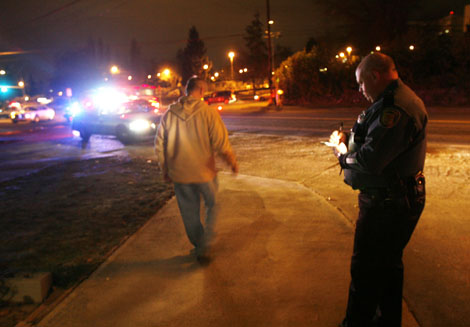
Extremely toxic drivers, such as those convicted of driving under the influence of drugs or alcohol, may make an exclusion a necessity.

Extremely toxic drivers, such as those convicted of driving under the influence of drugs or alcohol, may make an exclusion a necessity. (image by seattlepi.com)

As one’s household grows, so too, does their auto insurance policy. While this is a pretty standard and expected occurrence, it’s important for people with an increasing number of licensed drivers under one roof to realize they have options. Should any of their family members threaten their driving reputation and quotes, policyholders have the option to remove and exclude them from their insurance plans, making auto coverage someone else’s problem and responsibility.

Requesting an Exclusion

If you’re a policyholder interested in excluding one or more individuals from your policy, then you need to contact your insurance company and/or agent. Your request will have to be in writing and might also come with additional forms and paperwork, depending on who your insurance company is. It’s also important to note that requesting an exclusion may cause your rates to increase a bit, but some view this cost as a much more affordable expense than the potential damages they might be held accountable for when the dangerous driver(s) in question get in a serious accident or have repeated traffic offenses.

Whom Should I Exclude?

Now that you know how to request an exclusion, it’s important to understand WHO to exclude. You should exclude anyone you see as high-risk, unreliable and irresponsible. Individuals who show no regard for rules and regulations and could care less what happens to your name and record in the process are other obvious options. To help make the choice easier for you, below is a list of three individuals you definitely don’t want on your policy.

Mittens, the Family Cat

While a fluffy, cute member of the family, Mittens also has a wild side with which you are all too familiar. She is open about her late-night romps with her neighborhood friends, often coming home as the sun rises. She’s practically nocturnal! Those crazy hours coupled with her sassy attitude are a recipe for disaster for you and your record, so nip this problem in the bud while you still can — before Mittens brings you down with her.

Your Six-year-old Who’s Going on Sixteen

Six-year-old Ben is your pride and joy. He’s cute and sweet, but let’s be honest — the boy is growing up too fast. Rather than run the risk of him growing up, stealing your car and running away, it’s probably best to exclude him from your policy to keep that from happening. You might not be able to stop him from physically growing, but you will darn sure try to stop him from leaving you!

The Neighbor Next Door Who Thinks He’s ALWAYS Welcome

Sure you let him borrow a cup a sugar once, but does that really warrant unannounced pop-ins or the dreaded ‘surprise I was waiting for you to get home from work’ visit? The answer is obviously no, but that doesn’t stop your too-close-for-comfort neighbor from doing just that and more. A sweet, eager individual with no concept of social norms, this neighbor is here so often you’re worried he thinks he’s actually a part of the family. While you technically shouldn’t have to cover him on your insurance, the lines that surround your whole relationship — and evidently your property— have been blurred. So, just to be on the safe side, you better exclude him. Who knows, maybe one day he’ll get really comfortable and decide to take your car for a spin and get locked up for grand theft auto — maybe then at least you’ll get to cook in peace again!

Reality Check

Obviously, these examples of potential exclusions are extreme and ridiculous, but that’s just the point. Auto insurance exclusions are a serious issue that should be treated as such. They shouldn’t be added to policies willy-nilly and on a whim, but rather after serious thought and consideration has been given to the situation. It can be a pricey and potentially lengthy process that should only be implemented after you have determined there is no other feasible option.

You should only opt to exclude drivers with repeated violations such as driving under the influence of alcohol or drugs, speeding or any other behavior that shows a disregard for the law. It’s also important to note that exclusions can also apply to non-related roommates. Depending on your policy and location, it might be a smart idea to exclude any irresponsible roommates you might have, should they try to drive your vehicle without permission and thus endanger your reputation and record.

We do hope you’re never presented with having to exclude a family member from your auto policy. Keep in mind, it’s only advisable when the said-driver is extremely toxic. Most of the time, excluding a single driver will only lead to higher rates for everyone involved.

You’ll know they are a real risk if they cause you to be subjected to higher rates, or worse, put you in danger of losing your coverage altogether — those are costly expenses worth the fees that come along with an exclusion.

If you are seriously considering opting for an exclusion, talk with your insurer to explore all of your options and alternatives. They should help point you in the right direction for your future.

The post Everything You Need to Know About Excluding People From Auto Insurance appeared first on CarInsurance.org.

Why you need new quotes Read on to find out more.. Related content.. Similar articles.. Read more..